Start Your Corporate Tax Filing

Annual Corporate Tax Return in Abu Dhabi
Annual Corporate Tax Return in Abu Dhabi
Gupta Group International
2/27/20266 min read


Annual Corporate Tax Return in Abu Dhabi
Annual Corporate Tax Return in Abu Dhabi: The Complete Guide for Businesses in the UAE
The United Arab Emirates (UAE) ushered in a modern, federal corporate tax regime that applies across all seven emirates, including Abu Dhabi — the country’s commercial capital and a leading global business hub. As the UAE continues its strategic economic diversification, corporate tax compliance — particularly annual corporate tax return filing — has become a fundamental obligation for companies operating within Abu Dhabi.
This guide is written to help business owners, financial executives, and C-suite leaders understand everything they need to know about Annual Corporate Tax Return in Abu Dhabi — why it matters, who must file, how to prepare and submit it, common pitfalls to avoid, and how strategic support from experienced consultants can protect your business and enhance compliance.
Whether you operate on the mainland, in one of Abu Dhabi’s thriving free zones, or as a multinational branch office, this article has been carefully crafted to give you the authoritative insights you need.
Understanding Corporate Tax in the UAE with an Abu Dhabi Lens
Prior to 2023, the UAE was known as a tax-neutral jurisdiction — attracting companies from around the world to establish regional headquarters and expand operations. With the introduction of federal corporate tax, businesses now face a new statutory obligation.
What Is Corporate Tax?
Corporate tax is a levy on the net taxable profits of a business. In the UAE:
The standard corporate tax rate is 9% on profits exceeding AED 375,000.
A 0% rate may apply for qualifying entities, including certain free zone companies, subject to compliance with regulatory conditions.
Even though the UAE’s corporate tax system is designed to be business-friendly, accurate and timely filing of annual corporate tax returns is essential for every eligible entity.
Why Annual Corporate Tax Return Filing Matters in Abu Dhabi
Annual corporate tax return filing is a statutory requirement and a key compliance obligation. However, its importance extends beyond simply meeting a deadline.
1) Legal Compliance
Companies operating in Abu Dhabi must file annual returns within prescribed timeframes or risk penalties, fines, and escalation of regulatory action.
2) Financial Transparency
Accurate tax returns strengthen your financial credibility, offering investors, regulators, and stakeholders clear evidence of your company’s financial performance.
3) Audit Readiness
Should your business be selected for an audit by the Federal Tax Authority (FTA), having properly filed returns with supporting documentation significantly simplifies the process.
4) Strategic Tax Planning
The corporate tax return acts as a long-term tool for financial planning — enabling better revenue forecasting, deductions analysis, and compliance optimization.
Who Must File an Annual Corporate Tax Return in Abu Dhabi?
Corporate tax liability is determined by the nature of your business activity, location, and legal status.
Here are the primary categories of entities that must file:
🔹 Abu Dhabi Mainland Companies
Companies incorporated in Abu Dhabi mainland, including:
LLCs
Partnerships
Professional services providers
🔹 Free Zone Entities
Companies operating within Abu Dhabi’s free zones (e.g., Abu Dhabi Global Market (ADGM), Khalifa Industrial Zone Abu Dhabi (KIZAD)) may benefit from preferential tax rates if they meet regulatory compliance requirements.
🔹 Branch Offices of Foreign Companies
Foreign corporations with UAE operations must file returns for their UAE-sourced profit.
🔹 Joint Ventures and Partnerships
Joint ventures, consortiums, or special purpose entities that generate profits in Abu Dhabi are required to file.
🔹 Professional and Consulting Firms
Independent or partnership-based firms, ranging from consulting practices to finance companies, are also within the filing scope.
Note: Entities with zero taxable profits or no trading activity may still be required to submit nil returns to demonstrate compliance.
Abu Dhabi Corporate Tax Return Deadlines & Filing Schedule
The UAE Federal Tax Authority (FTA) enforces structured filing timelines that every eligible business must adhere to.
1. Standard Tax Period
Default period: January 1 to December 31
Optionally, companies may apply to adopt an alternative financial year with FTA approval
2. Filing Deadline
The corporate tax return must be submitted within 9 months after the end of the financial period.
Example: If your financial year ends on December 31, 2024, the filing deadline is September 30, 2025.
3. Tax Payment Deadline
Any tax liability must be paid no later than the filing deadline.
4. Penalty Risk
Late filing or delayed tax payments can result in:
Financial penalties
Interest charges
Compliance enforcement actions
Timely submissions are not just a formality — they are critical to protecting your reputation and operational continuity.
Step-by-Step Guide: How to File Your Corporate Tax Return in Abu Dhabi
Successfully filing your corporate tax return requires careful preparation, accurate financial tracking, and understanding of FTA requirements. Here’s a systematic workflow:
Step 1: Register with the Federal Tax Authority
Ensure your business is registered on the FTA’s online portal. Registration is mandatory before you can file your corporate tax return electronically.
Step 2: Prepare Financial Statements
Accurate financial records are the cornerstone of corporate tax filing. This includes:
Audited financial statements (if applicable)
Trial balance
General ledger
Detailed income and expense documentation
Step 3: Compute Taxable Profits
Determine your taxable profit by:
Starting with net accounting profit
Adding back non-deductible expenses
Subtracting allowable deductions
Applying exemptions where applicable
Errors in computation can lead to penalties or increased tax liabilities.
Step 4: Gather Supporting Documentation
Prepare all supporting documents including:
Bank statements
Invoices and receipts
Transfer pricing documentation (if related-party transactions exist)
Free zone certificates (for entities claiming 0% tax)
Step 5: File Electronically on the FTA Portal
Corporate tax returns must be filed using the FTA’s e-portal in compliance with UAE regulations. Ensure attachments and forms are properly completed.
Step 6: Review and Submit Tax Payment
Upon successful submission, pay any tax owed by the filing deadline and retain proof of payment.
Required Documents for Filing in Abu Dhabi
Here is a practical document checklist to ensure smooth filing:
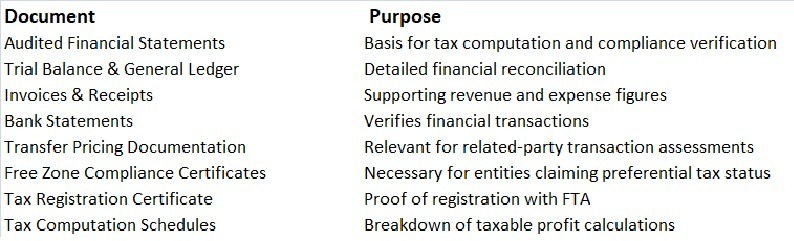
Maintaining complete documentation helps ensure accuracy and minimizes audit risk.
Free Zone Companies in Abu Dhabi & Corporate Tax Filing
Abu Dhabi’s free zones are vibrant business ecosystems with tailored benefits. Under the UAE corporate tax law, many free zone entities can qualify for a 0% corporate tax rate — provided they fulfill specific legislative criteria.
🟢 Eligibility for 0% Tax
To benefit from 0% tax in Abu Dhabi free zones, a company usually must:
Conduct genuine economic activities
Maintain adequate physical presence and staff
Comply with economic substance requirements
Adhere to transfer pricing standards
Some of Abu Dhabi’s prominent free zones include:
Abu Dhabi Global Market (ADGM)
Khalifa Industrial Zone Abu Dhabi (KIZAD)
⚠️ Risk of Losing Benefits
Failing to meet compliance conditions could result in your company being subject to the standard 9% corporate tax.
This makes expert guidance crucial for free zone businesses to maintain compliance and safeguard their tax position.
What Is Transfer Pricing & Why It Matters in Abu Dhabi Tax Filing
Transfer pricing refers to how related entities price internal transactions. Under the UAE tax regime, such transactions must adhere to the arm’s length principle — meaning the price should be consistent with what unrelated parties would agree to under similar conditions.
1) Transfer Pricing Requirements
Companies engaging in related-party transactions such as:
Management fees
Inter-company sales
Service agreements
Cost allocations
…must prepare documentation demonstrating that the pricing is consistent with market norms.
2) Regulatory Purpose
The goal is to prevent profit shifting and base erosion while ensuring taxable profits are properly reported in the UAE.
Common Mistakes to Avoid When Filing Tax Returns in Abu Dhabi
Even seasoned companies can make compliance errors. Here are pitfalls to avoid:
1. Late Filing or Payment
Failure to file or pay on time attracts fines and interest charges.
2. Inaccurate Financial Records
Incomplete general ledgers, unverified entries, and missing reconciliations may trigger audits.
3. Insufficient Supporting Documentation
Lack of invoices, receipts, or tax schedules delays processing and increases scrutiny.
4. Misclassification of Expense Items
Not all expenses qualify for deduction — careful categorization is essential.
5. Ignoring Transfer Pricing Requirements
Unexplained related-party transactions can lead to adjustments and penalties.
Careful planning, detailed documentation, and early preparation help businesses avoid expensive mistakes.
Penalties & Enforcement by the Federal Tax Authority
The FTA has enforcement mechanisms to ensure compliance, including:
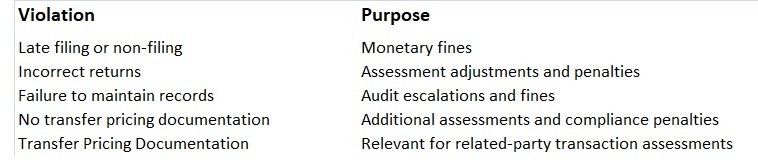
Maintaining accurate records and fulfilling filing obligations early significantly reduces risks.
Role of Professional Support in Annual Corporate Tax Filing
Corporate tax compliance can be complex — especially in Abu Dhabi’s dynamic market. Professional advisors help you:
Interpret UAE tax regulations
Prepare accurate and compliant returns
Maintain transfer pricing documentation
Identify eligible deductions and exemptions
Avoid penalties and manage audits
At uae-corporatetaxfiling.com, dedicated specialists provide end-to-end support — from calculation and documentation to submission and compliance strategy.
Case Study: How Professional Assistance Transformed Tax Filing for an Abu Dhabi Company
Client: A medium-sized tech services company headquartered in Abu Dhabi with multiple subsidiaries
Challenges
Unorganized financial records
No transfer pricing documentation
Tax filing deadlines approaching
Inexperience with the UAE tax portal
Solution
Full financial reconciliation conducted
Transfer pricing framework prepared
Annual return successfully filed ahead of deadline
Tax compliance report submitted to management
Outcome:
Zero penalties or fines
Improved clarity in financial reporting
Regulatory confidence for investors
Smoother future filings
This example demonstrates how expert support can streamline a complex compliance exercise and deliver strategic value.
Conclusion: Securing Your Annual Corporate Tax Return in Abu Dhabi
The mandatory annual corporate tax return is an essential compliance requirement that every eligible business in Abu Dhabi must understand and execute responsibly. From organizing financial records to computing taxable profits, gathering documentation, meeting transfer pricing standards, and filing on time — the process reflects not only regulatory adherence but also financial discipline and strategic foresight.
As corporate tax becomes ingrained in the UAE’s economic landscape, businesses that master compliance will enjoy:
Stronger investor confidence
Enhanced corporate transparency
Lower compliance risk
Better financial planning
If your company needs expert help with Annual Corporate Tax Return in Abu Dhabi, including calculation, documentation, submission, and future planning, the professionals at uae-corporatetaxfiling.com are ready to assist with tailored solutions that save time, reduce risk, and ensure compliance.
Services
Corporate Tax Registration • Corporate Tax Return Filing • Corporate Tax Advisory • Corporate Tax Planning & Structuring • Corporate Tax Compliance Review • Corporate Tax Assessment Support • Corporate Tax Audit Assistance • Corporate Tax Reconsideration Support • Corporate Tax Deregistration • Corporate Tax Documentation & Record-Keeping Support • Transfer Pricing Compliance • Tax Residency Certificate Assistance
Service Coverage Across UAE Free Zones
DMCC • JAFZA • DAFZA • DIFC • DSO • MEYDAN • SAIF ZONE
Our services are available across the UAE
Dubai • Abu Dhabi • Sharjah • Ajman • Ras Al Khaimah • Fujairah • Umm Al Quwain
Contact Us
📞 +971 4 396 7982
✉ info@guptagroupinternational.com
Useful Links
Corporate Tax Overview | Corporate Tax Registration | Corporate Tax Return Filing | Corporate Tax Deadlines & Penalties | Corporate Tax Rates in UAE | Corporate Tax for Free Zone Companies | Corporate Tax Compliance Requirements | Transfer Pricing | Resources | Careers | Contact
Legal
Privacy Policy | Cookie Policy | Terms of Use | Disclaimer
© 2001–2026 Gupta Group International