Tel: +971 4 396 7982
Mobile: +971 55 989 3299
Email: info@guptaaccountants.com

Annual Corporate Tax Return in Sharjah
Annual Corporate Tax Return in Sharjah
Gupta Group International
2/26/20267 min read


Annual Corporate Tax Return in Sharjah
Annual Corporate Tax Return in Sharjah: The Complete Guide for Businesses in the UAE
The introduction of corporate tax in the United Arab Emirates (UAE) marks a transformative moment in the nation’s economic policy. For businesses operating across the emirates — including Sharjah — the obligation to file an Annual Corporate Tax Return is now a pivotal part of financial compliance and corporate governance. This comprehensive guide is tailored for business owners, financial executives, and decision-makers who want to understand how corporate tax return filing works in Sharjah — what it means, who must file, how to prepare, and why it matters for long-term success.
Whether you are a mainland entity, a free zone company, a branch of a foreign corporation, or a professional services firm, this blog will walk you through every aspect of annual corporate tax filing in Sharjah, and why professional assistance — such as the services offered by uae-corporatetaxfiling.com — can be a game changer for your business.
What is Corporate Tax in the UAE? A Sharjah Perspective
The UAE’s federal corporate tax regime applies to companies across all seven emirates, including Sharjah. While the UAE had historically been known as a tax-neutral jurisdiction, the introduction of corporate tax has aligned the country with global standards of economic substance and transparency.
🔍 Fundamentally, corporate tax is a levy on the net profits of businesses. The UAE’s tax framework is designed to be business-friendly, competitive, and aligned with international norms. The standard corporate tax rate is 9% on taxable profits exceeding AED 375,000. Certain qualifying businesses — including eligible free zone companies — may benefit from a 0% tax rate under specified conditions.
In Sharjah, the corporate tax regime applies uniformly as it does across the UAE. Whether your business operates from Sharjah Mainland, Sharjah Airport International Free Zone (SAIF Zone), Hamriyah Free Zone, or other commercial districts, understanding the annual corporate tax return is essential.
Why Annual Corporate Tax Return Filing Matters in Sharjah
Filing an annual corporate tax return is not just a compliance exercise — it’s a key financial responsibility. Accurate tax filing demonstrates legal compliance, enhances corporate credibility, and provides valuable financial visibility.
Here’s why filing your annual corporate tax return is critical:
1. Legal Compliance
Every eligible entity in Sharjah must file a corporate tax return within the statutory deadline. Non-compliance can result in fines, administrative sanctions, and reputational impact.
2. Financial Accountability
Annual returns summarize your business’s financial performance and taxable position. This transparency is essential for shareholders, financial institutions, and auditors.
3. Business Growth and Investment Readiness
A properly filed tax return strengthens investor confidence and supports efforts to secure financing or partnerships.
4. Audit Preparedness
If your company is selected for a corporate tax audit or review, having a compliant return, backed by supporting documents, simplifies the process.
Who Must File an Annual Corporate Tax Return in Sharjah?
Understanding your tax obligations is the first step toward compliance. In Sharjah, the following entities are generally required to file annual corporate tax returns:
1. Sharjah Mainland Companies
This includes Limited Liability Companies (LLCs), local partnerships, professional firms, and licensed commercial entities.
2. Free Zone Companies
Free zone entities such as those in SAIF Zone, Hamriyah Free Zone, or other specialized economic zones may qualify for preferential tax treatment, including the potential to apply a 0% corporate tax rate — provided they meet economic substance and compliance requirements.
3. Branch Offices of Foreign Companies
Branches operating in Sharjah must file returns for income generated within the UAE.
4. Professional and Consulting Firms
Even non-profit or consultative businesses must submit corporate tax returns, including “nil” returns if no taxable income exists.
5 Holding and Investment Companies
These entities must file returns if they derive taxable revenue or profits from eligible activities.
Important: Entities that did not trade or generate profits may still be required to submit a nil return to demonstrate compliance.
Sharjah Corporate Tax Filing Deadlines and Timelines
The Ministry of Finance (MoF) in the UAE has set a clear structure for tax filing timelines:
1. Tax Period
A standard tax year runs from January 1 to December 31.
Companies may request a different financial year with MoF approval.
2. Corporate Tax Return Deadline
Generally, returns must be filed within nine months after the end of the financial period.
Example: For a financial year ending on December 31, the tax return is due by September 30 the following year.
3. Tax Payment Deadline
After filing, any tax due must be paid on or before the filing deadline.
Missing deadlines can trigger:
Late filing penalties
Administrative fines
Withholding of refunds
Filing ahead of deadlines and planning ahead reduces compliance risk and penalty exposure.
Step-By-Step: How to File Your Annual Corporate Tax Return in Sharjah
Filing your corporate tax return involves a structured workflow. Here’s a clear, detailed step-by-step guide:
Step 1: Register Your Business with the UAE Tax Authority
If your company is not already registered for corporate tax, you must complete registration through the Federal Tax Authority’s online portal. Registration is the foundation for electronic filing and compliance.
Step 2: Organize Financial Records & Statements
Before filing:
Prepare audited financial statements (if applicable)
Reconcile income and expenses
Collect supporting documents such as invoices, receipts, and bank statements
Maintain documentation for related party transactions
Accurate bookkeeping is essential for corporate tax reporting.
Step 3: Determine Taxable Profits
To compute taxable income:
Start with your net accounting profit.
Add back non-deductible expenses.
Deduct allowable tax adjustments.
Account for exemptions and statutory deductions.
Companies operating in free zones must also verify any eligibility conditions for preferential tax treatment.
Step 4: Prepare Supporting Documents
At a minimum, you should prepare:
Audited financial statements (if required)
Trial balance and general ledger
Transfer pricing documentation (for related party transactions)
Free zone compliance certificates (if applicable)
Tax reconciliation schedules
Step 5: Log In and Submit Electronically
Corporate tax returns must be submitted electronically via the UAE Federal Tax Authority’s online portal. Ensure correct formatting and attachments when uploading.
Step 6: Review and Submit Payment
Once submitted:
Monitor acknowledgement and acceptance notifications
Pay any tax due by the deadline
Retain the payment confirmation for your records
Proper filing and payment safeguard your business from penalties and compliance challenges.
Required Documents for Sharjah Corporate Tax Return Filing
A complete and accurate filing process requires these key documents:
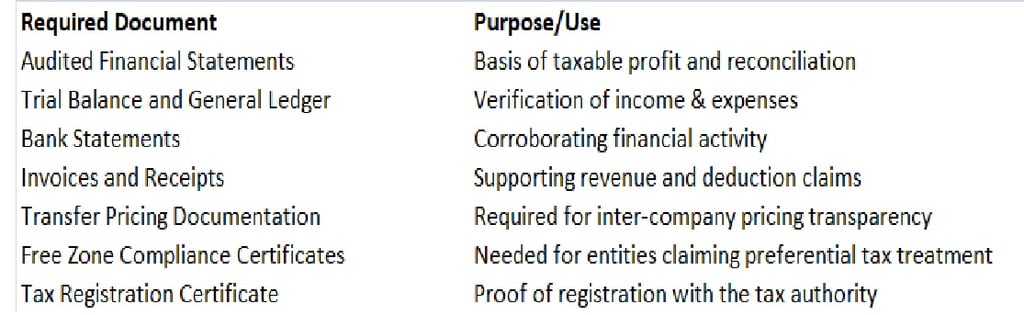
Failing to maintain or provide these documents may lead to additional queries from the tax authority or audit escalations.
Free Zone Entities in Sharjah: What You Need to Know
Sharjah is home to vibrant free zones such as:
Sharjah Airport International Free Zone (SAIF Zone)
Hamriyah Free Zone Authority (HFZA)
Various specialized industrial and economic zones
Many free zone companies in Sharjah may qualify for 0% corporate tax. However, eligibility depends on meeting strict conditions, such as:
Conducting genuine economic activity within the UAE
Maintaining adequate staff, premises, and operations
Complying with economic substance and transfer pricing rules
Failing to meet these conditions can result in your company being taxed at the standard corporate tax rate. Expert guidance is often needed to navigate these requirements and secure your preferred tax treatment.
Understanding Transfer Pricing and Sharjah Tax Returns
Transfer pricing rules apply when businesses transact with related parties — including companies within the same group or common ownership structures. The UAE’s corporate tax framework requires that related-party transactions be priced at “arm’s length”.
This means:
Prices must reflect market-consistent terms
Documentation must justify pricing methods
Policies must be in place and accessible during filing
Without robust transfer pricing documentation, companies may face adjustments or penalties, increasing their effective tax liability.
Common Mistakes to Avoid When Filing Your Tax Return
Even seasoned professionals can fall into compliance challenges. Avoid these common errors:
1) Late or Incomplete Filing
Missing deadlines or incomplete returns can trigger penalties and enforcement action.
2) Inaccurate Financial Reporting
Reconciliation issues, errors in bookkeeping, or missing entries may lead to tax discrepancies.
3) Lack of Supporting Documentation
Without valid invoices, receipts, or trial balances, tax authorities may issue queries or adjustments.
4) Incorrect Deductions
Certain expenses must be carefully classified to avoid disallowance.
5) Neglecting Economic Substance and Transfer Pricing
Ignoring these requirements can invalidate free zone tax perks or lead to additional assessments.
Penalties and Compliance Enforcement in Sharjah
The UAE’s Federal Tax Authority enforces compliance with a range of penalties for errors or non-compliance:
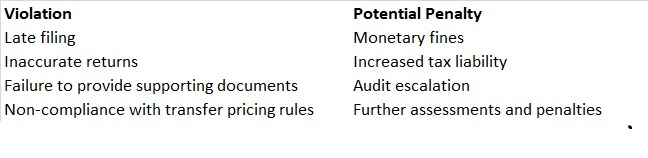
Timely and accurate filing keeps your business on solid regulatory ground.
Why Professional Support Matters for Sharjah Tax Filing
The corporate tax return process involves:
Detailed reconciliation
Compliance with evolving regulations
Validation of eligibility for tax incentives
Coordination with auditors and financial teams
Without expert support, companies risk costly mistakes, missed opportunities for optimization, and compliance challenges. Professional advisory can provide:
Expert interpretation of complex tax laws
Accurate tax computation and filing
Audit support and documentation readiness
Free zone eligibility assessment
At uae-corporatetaxfiling.com, our specialists act as trusted partners who simplify your tax obligations so you can focus on business growth.
Case Study: Sharjah Business That Streamlined Tax Filing
Company Alpha — a technology services firm operating from Sharjah Mainland — faced key challenges:
Incomplete financial records
Unclear transfer pricing documentation
No previous tax filing experience
After engaging experts:
Financial books were reconciled
Required documentation was prepared and validated
Annual corporate tax return was successfully filed
The business avoided penalties and improved internal systems
Outcome
Streamlined filing, enhanced compliance, and improved financial clarity secured better investor confidence.
Securing Corporate Tax Compliance in Sharjah
The implementation of corporate tax in the UAE represents a significant evolution in regulatory expectations for businesses across Sharjah and beyond. Annual corporate tax return filing is now a core obligation for any profit-seeking entity, and it brings with it legal, financial, and strategic importance.
With:
Clear deadlines
Rigorous documentation requirements
Evolving compliance standards
Free zone eligibility conditions
…companies must adopt proactive tax planning supported by expert guidance.
Whether you’re a startup, an established enterprise, a free zone entity, or a foreign-owned branch, understanding and executing your annual corporate tax return filing — accurately and on time — is vital for safeguarding your business, enhancing investor confidence, and unlocking future opportunities.
If you are looking for reliable, professional support to manage your corporate tax return in Sharjah, the specialists at uae-corporatetaxfiling.com are here to help. With tailored solutions and deep expertise, we ensure your business stays compliant, efficient, and growth-ready.
© 2026 www.uae-corporatetaxfiling.com